Who it is for
For technical teams and companies translating a component into a mould design. Assessment starts with the part, material and expected volume, considering draft angles, undercuts and mating areas.

Mould design is one of our core competencies. We design injection moulds and compression moulds — not only for plastics, but also for rubber and other materials — covering a wide range of industrial applications. Each mould is engineered with maximum precision and durability to guarantee high-quality components.
We use advanced tools such as Moldflow to analyse material flow inside the mould, optimising cavity filling, reducing the risk of defects, and ensuring uniform material distribution. This approach allows us to identify and resolve potential issues at the design stage, saving time and reducing production costs.
We work closely with our clients to ensure the mould exactly reflects their production requirements and quality standards, delivering full technical documentation and supporting the entire qualification phase through to first-off approval.
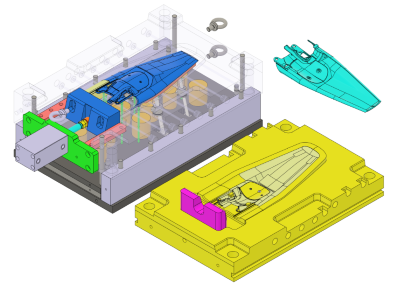
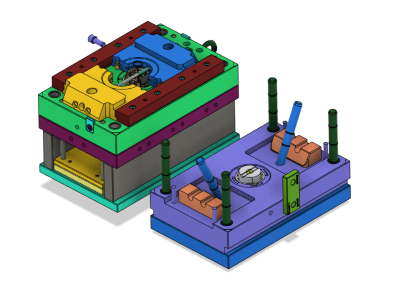
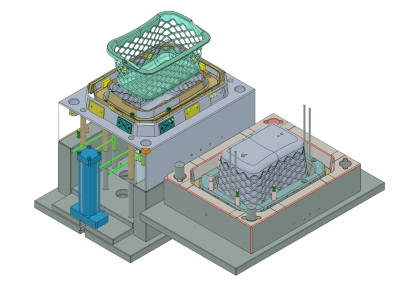
For technical teams and companies translating a component into a mould design. Assessment starts with the part, material and expected volume, considering draft angles, undercuts and mating areas.
We review geometry and feasibility, define the mould layout and develop technical documentation. Where included, filling analysis supports decisions; interfaces are agreed with the appointed mould maker.
Mould models and drawings, specifications and a component list may form part of the agreed delivery. Detail level, formats and included revisions are set according to the supplier and the assignment.
Send part CAD and drawings, intended material, annual quantities, finishes and tolerances. Where available, add press data, preferred cavity count and constraints from the appointed mould maker.
Zoro Tech Design provides design and technical consultancy. Construction, testing and manufacturing are undertaken by suppliers appointed by the client; technical support is agreed separately.
Feasibility depends on the available files, the observed defect and tooling constraints. Part and mould data are needed before defining a revision.